内存优化:创建多个合约
分析
Solidity 将合约创建视为类似外部调用,返回 32 个字节(即,返回已创建合约的地址,如果合约创建失败则返回地址 (0))。优化此操作的一种方法是将返回的地址存储在临时空间中,避免扩展内存。请参阅下面的类似示例;
    // cost: 261032
    function call() external returns (Called, Called) {
        Called called1 = new Called();
        Called called2 = new Called();
        return (called1, called2);
    }


    // cost: 260210
    function call() external returns(Called, Called) {
        bytes memory creationCode = type(Called).creationCode;
        assembly {
            let called1 := create(0x00, add(0x20, creationCode), mload(creationCode))
            let called2 := create(0x00, add(0x20, creationCode), mload(creationCode))
// revert if either called1 or called2 returned address(0)
            if iszero(and(called1, called2)) {
                revert(0x00, 0x00)
            }
            mstore(0x00, called1)
            mstore(0x20, called2)
            return(0x00, 0x40)
        }
    }

contract Callme1 {
    function add(uint256 a, uint256 b) external pure returns(uint256) {
        return a + b;
    }
 }
通过使用内联汇编,节省了gas。注意:在部署两个合约不相同的场景下,第二个合约的创建代码需要使用内联汇编手动存储,而不是赋值给 Solidity 中的变量,以避免内存膨胀。
测试
文件位置:
src/assembly/MemoryExp.sol
test/assembly/MemoryExp.t.sol
测试结果:
forge test --gas-report --mt test_memexp_deploy_ -vvv --optimize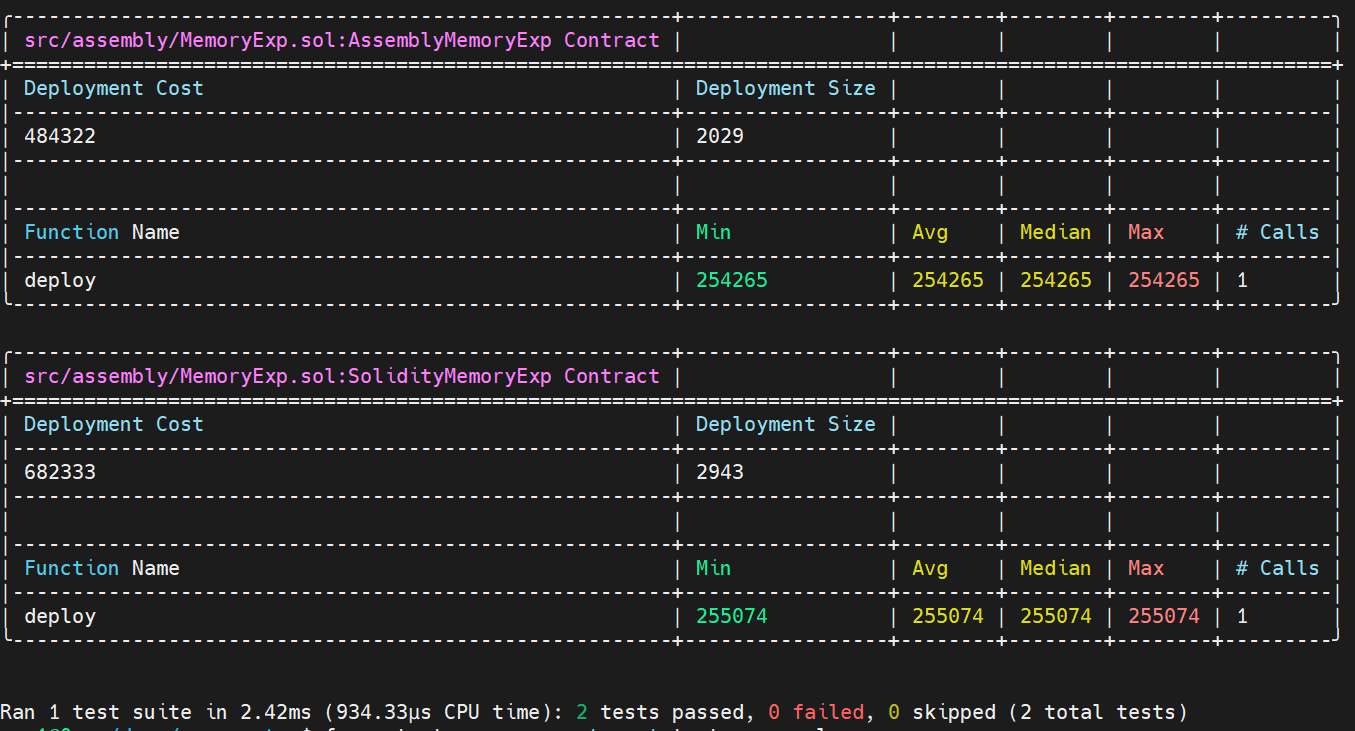
总结
对应源码
本文配套代码固定到提交
8960383;Gas 数据会随编译器、优化器参数和 EVM 版本变化。